Search Results

- IDNO:
- 028448
- Title:
- Destroyed Bank of Chambersburg & Franklin House After Mc Causland Raid
- Date:
- 1864/07/30
- Description:
- Stero card photograph of buildings in Chambersburg, Pennsylvania, burned by the Confederate Cavalry under General John Mc Causland of Mason County, West Virginia. Mc Causland's destructive raid was in reprisal for the burnings in the Shenandoah Valley by the Union troops.

- IDNO:
- 039076
- Title:
- Baltimore & Ohio Railroad Bridge in Ruins, Harpers Ferry, Va. (W. Va.)
- Date:
- 1861
- Description:
- The first of nine times this bridge, which crossed the Potomac River into Maryland, was destroyed during the Civil War. The damage in the photograph was the work of Confederate Colonel Thomas (later General "Stonewall") Jackson's troops, before pulling back to Winchester in June, 1861. The shells of the burned Armory buildings still stands in the background below the town.
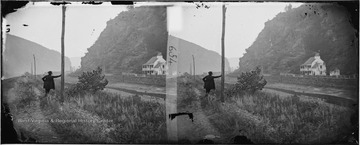
- IDNO:
- 039079
- Title:
- Harpers Ferry Gap, Harpers Ferry, Va. (W. Va. )
- Date:
- 1862/10
- Description:
- Looking east along the Potomac River on the Virginia (West Virginia) side. The ruins of the Armory can be seen on the left and telegraph poles line the damaged tracks. Two men, one leaning on a telegraph pole and another next to the house are not identified. The photograph was taken several weeks after the September,1862 battle when Stonewall Jackson's artillery shelled the town, forcing the Union troops to surrender.
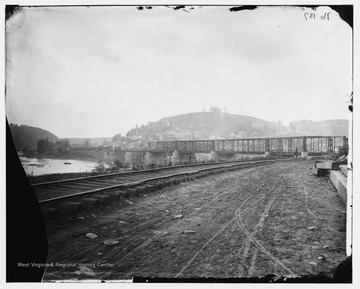
- IDNO:
- 039080
- Title:
- Baltimore & Ohio Railroad Bridge Over Potomac River Across From Harpers Ferry, W. Va.
- Date:
- ca.1863
- Description:
- One of the nine reconstructed bridges (on the same spot) connecting Harpers Ferry over the Potomac River to Maryland. This bridge was also eventually destroyed during the Civil War.
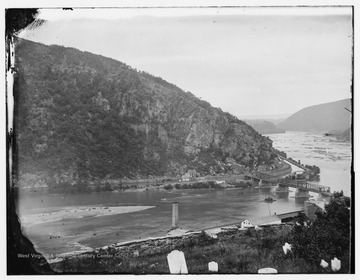
- IDNO:
- 039081
- Title:
- Maryland Heights Across Potomac River at Harpers Ferry, Va, (W. Va.)
- Date:
- ca. 1862
- Description:
- Maryland, the Chesapeake & Ohio Canal and a reconstructed Baltimore and Ohio Railroad bridge on the Potomac River as viewed from the Harpers Ferry cemetery. Note the head stones in the foreground and the smoke stack of the burned out United States Armory below. The photograph was taken during the Civil War.
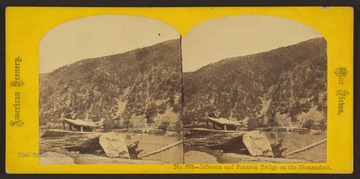
- IDNO:
- 039082
- Title:
- View of Jefferson Rock and Pontoon Bridge Over Shenandoah River, Harpers Ferry, W. Va.
- Date:
- ca. 1863
- Description:
- An unidentified man sits on Jefferson Rock above the Shenandoah River at Harpers Ferry. A pontoon bridge has been laid across the river to temporarily replace the destroyed bridge. The bridge's piers can be seen rising out of the river.
- IDNO:
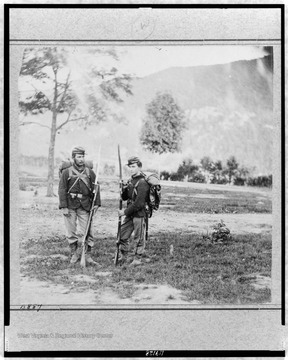
- 039083
- Title:
- Soldiers of 22nd New York Militia, Union Army, Harpers Ferry, Va. (W. Va.)
- Date:
- 1861
- Description:
- Two unidentified Union soldiers in uniform, full pack and armed on Camp Hill above Harpers Ferry during the Federal forces occupation of the area early in the Civil War. Note the huge bayonets attached to their rifles.
- IDNO:
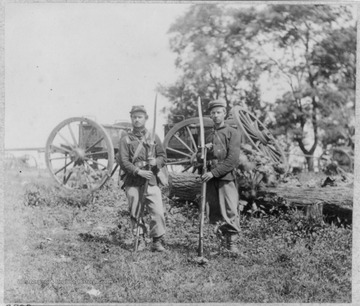
- 039084
- Title:
- Soldiers of 22nd New York Militia, Camp Hill, Harpers Ferry, Va. (W. Va.)
- Date:
- ca. 1861
- Description:
- Two unidentified soldiers of the 22nd New York State Militia, Union Army, in full uniform and armed, standing in front of a caisson. Note the caisson carries a spare wheel.
- IDNO:
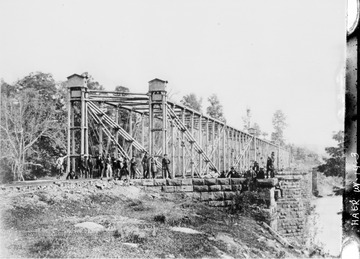
- 039086
- Title:
- Baltimore and Ohio Railroad Bridge at Fairmont, Va. (later W. Va.) Destroyed During Civil War
- Date:
- ca.1855
- Description:
- This 305 foot long iron bridge over the Monongahela River in Marion County was built in 1852 at the astronomical price of 1/2 million dollars and was, at that time, the longest iron bridge in the country. Confederate General "Grumble" Jones targeted this bridge during his infamous 1863 raid. After two failed attempts to blow the bridge, he succeeded on the third try.

- IDNO:
- 041551
- Title:
- Edwin M. Stanton, Secretary of War During Lincoln Administration 1862-1865
- Date:
- ca. 1862
- Description:
- Stanton stayed in close contact with Governors Pierpont and Boreman of the Restored Government of Virginia and West Virginia respectively, during the Civil War. Stanton supported West Virginia statehood and was aware of the need for a strong Union military presence in the region.


